Presented as poster 2326 at the EADV Congress running September 30 through October 3, 2026, a 16-month study of 8,391 patients across two UK hospitals found that autonomous AI triage for suspected skin cancer referrals created capacity equivalent to more than 8,500 additional face-to-face dermatology appointments — without a doctor looking at the vast majority of the images first.
The waiting list problem this is meant to solve
Urgent skin cancer referrals in the UK operate on a two-week target: see a suspicious mole or lesion, get referred, get seen within 14 days. In practice, dermatology departments have been buckling under referral volume for years, and melanoma is unforgiving about delay — survival rates drop sharply the deeper a melanoma has grown into the skin by the time it’s excised, which is why the two-week target exists in the first place and why missing it has real consequences rather than just being an administrative inconvenience. The pitch behind AI-assisted triage has always been capacity, not just speed — letting software handle the large share of referrals that turn out to be benign so clinicians can spend their limited hours on the cases that actually need a human eye.
What the AI was actually allowed to decide
In this study, the system handled 94 percent of urgent suspected skin cancer referrals at both hospitals, with 86 percent of patients consenting to let the AI’s decision stand without an automatic clinician review. Autonomous discharge rates — cases the AI cleared entirely, with no need for a face-to-face appointment — ran at 31 percent at one hospital and 25 percent at the other. Clinicians still reviewed every case the AI flagged as suspicious; the autonomy applied specifically to ruling cases out.
The numbers that matter for safety
Sensitivity exceeded 98 percent for invasive melanoma, squamous cell carcinoma, and basal cell carcinoma — meaning the system almost never missed a true cancer among the cases it was confident enough to call. Specificity came in lower, at 72.1 percent, reflecting the tradeoff built into any triage system tuned to avoid missing cancer: it would rather over-refer than under-refer. Six false negatives did slip through over the 16 months — five basal cell carcinomas and one melanoma in situ — all caught later through post-market surveillance rather than by a human catching the AI’s mistake in real time.
What changed downstream
Routine follow-up appointments fell from 27 percent of cases to 12 percent, and biopsy rates dropped from 43 percent under conventional face-to-face care to 27 percent with AI triage in the pathway — fewer unnecessary procedures alongside fewer unnecessary visits. Across the full 16 months, the researchers calculated 2,851 hours of clinician time saved compared to a traditional pathway, equating to roughly a 62 percent gain in clinical capacity at both sites combined.
Why six missed cancers still matter
A 98 percent-plus sensitivity rate sounds close to flawless until it’s translated into real people: six patients whose basal cell carcinomas or melanoma in situ were initially discharged as low-risk. Basal cell carcinoma rarely spreads and melanoma in situ is its earliest, most treatable stage, which is the main reason the error rate didn’t translate into a safety scandal — but it is precisely the scenario regulators and dermatologists point to when arguing that autonomous discharge decisions need robust post-market surveillance built in from day one, not bolted on afterward. Skin Analytics, whose DERM technology underpins this kind of pathway, has previously projected that scaling AI triage across the UK could save the NHS roughly £35 million a year in avoided appointments — a number that only holds up if the missed-case rate stays this low at much larger volume. Patient groups have broadly welcomed the shorter waits the technology enables, while some dermatology trainees and advocacy bodies have separately raised a longer-term workforce concern: if autonomous triage absorbs the high-volume, mostly-benign referrals that have traditionally made up a large share of junior dermatologists’ early caseload, it could narrow the pipeline of hands-on experience new specialists rely on to build pattern-recognition skill over a career.
What’s next
With the NHS’s 10-Year Health Plan already signaling ambitions to make AI-assisted skin cancer pathways standard care by 2028, this study is likely to be cited as the evidence base for wider rollout decisions over the next two years. Expect other UK trusts to pilot similar autonomous-discharge pathways, and expect dermatology bodies to push for mandatory post-market surveillance standards as a condition of scaling — the six missed cases are small enough to defend at this volume, but would not be at national scale without a system built to catch them.
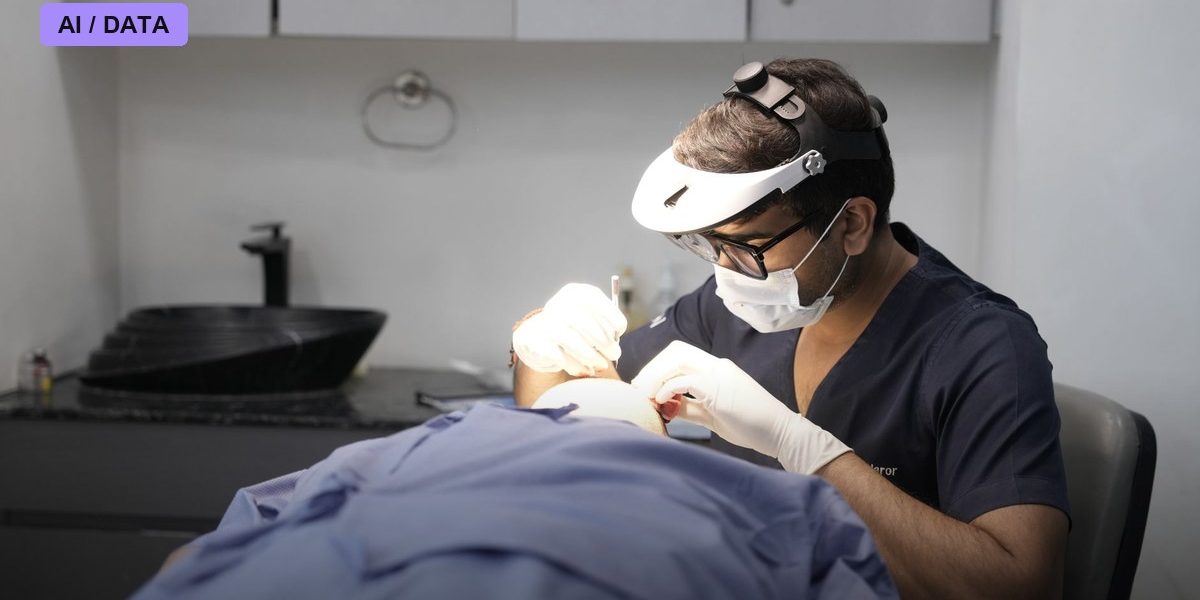
Photo: Dr. Haror’s Wellness / PEXELS via Pexels