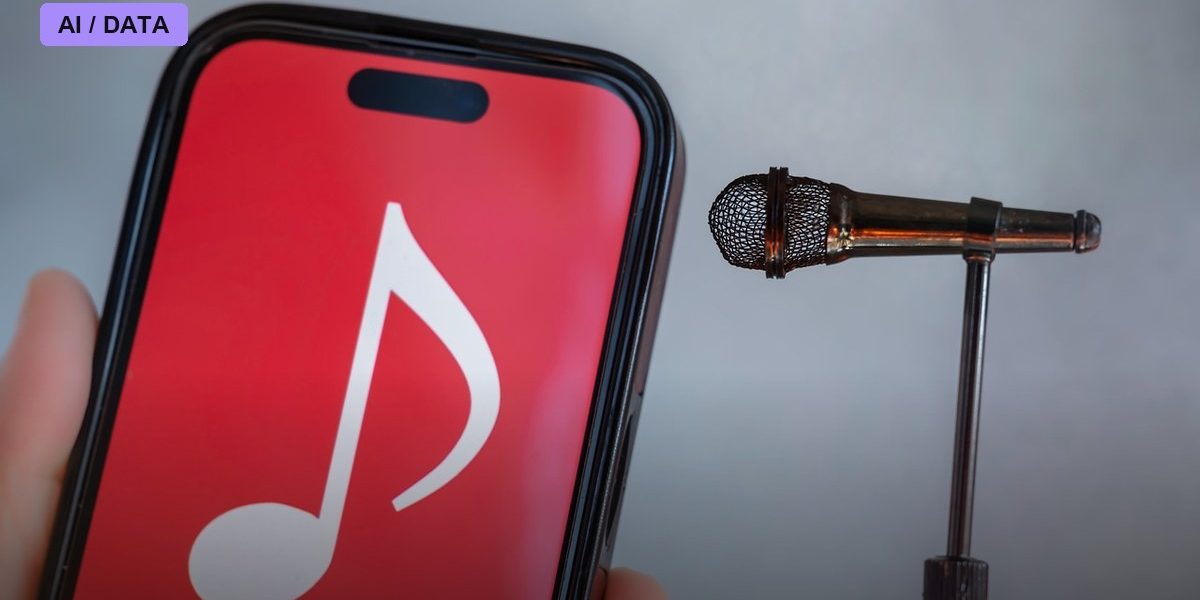
At the European Association for the Study of Diabetes congress in Milan, running September 28 through October 2, 2026, researchers from the UK deep-tech company thymia and RMIT University in Melbourne presented what they’re calling the largest real-world study yet of voice-based screening for type 2 diabetes. The pitch: read a short passage out loud, let an AI model listen for subtle vocal changes, and get a risk score without a needle, a lab, or an appointment.
The idea behind listening for disease
Type 2 diabetes is linked to physical changes that can show up in the voice — increased hoarseness and a reduced ability to control breath among them, tied to the condition’s effects on nerves, blood vessels, and muscle tissue. Voice biomarker research has been creeping into medicine for years, mostly in Parkinson’s and respiratory disease, but diabetes screening via speech is newer territory, and thymia’s pitch is explicitly about scale: a phone call or an app replacing a blood draw as the first screening step for a disease that often goes undiagnosed for years.
How the study was actually built
The team trained its model on 63,283 voice samples collected from 21,129 people in the UK and US, then validated it using 20-second recordings of participants reading one of Aesop’s fables — a format chosen because it standardizes what’s being said so the model can focus on how it’s said. The validation arm included 7,319 UK adults, 67 percent of them women, nearly 46 percent over age 40, with 217 confirmed type 2 diabetes cases in the group. A second, smaller validation of 801 participants checked the model’s output directly against blood test results rather than self-reported diagnosis.
What the numbers actually show
Against self-reported diabetes status, the model distinguished diabetic from non-diabetic speakers with 80 percent accuracy. Checked against real blood tests, accuracy dropped to 75 percent, with an 82 percent sensitivity rate — meaning it correctly flagged most people who actually had the condition — but a 47 percent false-positive rate, meaning nearly half of people it flagged as at-risk did not have diabetes. “This is the largest real-world study of speech-based screening for type 2 diabetes to date, which also checks the model’s predictions against blood test results,” said Giedrė Čepukaitytė, a research scientist at thymia, alongside colleagues Roseline Polle and Dr. Elisa Brann.
The honest read on a 47 percent false-positive rate
That false-positive figure is the number that should temper the headline. A screening tool that wrongly flags nearly half the people it calls at-risk isn’t a diagnostic replacement — it’s a triage nudge, useful mainly for steering people toward an actual blood test they might not otherwise have sought. Diabetes researchers have been here before with other low-friction screening tools: the value isn’t perfect accuracy, it’s casting a wider net than clinics currently can, especially for the estimated millions of people worldwide living with undiagnosed type 2 diabetes who never get tested because nothing prompts them to. The International Diabetes Federation has long estimated that roughly four in ten adults with diabetes globally don’t know they have it, a gap that grows every year the condition goes unmanaged, since untreated type 2 diabetes steadily damages nerves, kidneys, and blood vessels well before symptoms become severe enough to send someone to a doctor on their own.
Why this could matter outside the clinic
Unlike retinal scans or blood panels, a voice sample can be collected over an ordinary phone call, through a telehealth app, or even via a messaging platform — removing the need for a clinic visit entirely. That matters most for people with limited healthcare access, rural populations, and anyone who has simply never been screened. thymia’s framing is explicit about this: the goal isn’t to replace a doctor’s diagnosis, but to catch people who would otherwise never enter the system at all. It’s also a model that scales cheaply in a way lab infrastructure never will — a voice sample costs essentially nothing to collect and process compared with running a blood panel, which matters enormously in lower-income countries where diabetes prevalence is rising fastest but laboratory capacity has not kept pace.
What’s next
The researchers say the next phase involves testing the model across more diverse populations and age groups beyond the largely UK-based validation cohort, along with refining the algorithm to bring down that false-positive rate. If the approach holds up, expect pilot integrations with telehealth platforms and diabetes charities before any formal clinical endorsement — voice screening is more likely to show up first as an opt-in phone-app feature than as something your doctor orders directly.
Photo: subarasikiai / PIXABAY via Pixabay