The federal government’s health research moonshot agency has awarded the University of Vermont up to $38 million, the largest research contract in the university’s history, to build AI-powered “digital twins” of critically ill patients that could let doctors test treatments on a virtual copy of someone before trying them on the actual patient. The award, from the Advanced Research Projects Agency for Health (ARPA-H), funds a five-year, milestone-based project called ReSCUED, short for Reprogramming Severe Critical Illness Using Extensible Digital Twins, led by Dr. Gary An, a trauma surgeon and researcher at UVM’s Larner College of Medicine.
The Largest Research Award in UVM History
ARPA-H, a Department of Health and Human Services agency modeled loosely on the Pentagon’s DARPA and created to fund high-risk, high-reward medical research, is backing the project through its Critical Illness Immunological Reprogramming and Control Point Learning Engine program, known as CIRCLE. Richard L. Page, dean of UVM’s Larner College of Medicine, has highlighted the scale of the award as a milestone for the school, and the funding structure is deliberately staged: money is released against specific technical milestones over the life of the contract rather than handed over as a lump sum, a common ARPA-H practice meant to force early proof that the science is working before committing the full amount.
What a ‘Digital Twin’ of a Critically Ill Patient Actually Means
In industrial settings, a digital twin is a continuously updated virtual model of a physical object, like a jet engine, fed by real sensor data so engineers can simulate wear and test changes without touching the real machine. ReSCUED applies the same idea to human physiology. The system builds a mathematical model of a patient’s unique immune response, then uses it to forecast how a critical illness such as sepsis, trauma, or severe burns might progress, and to simulate how different treatments might change that trajectory before a clinician commits to one in real life. An AI-driven component Dr. An’s team describes as a “virtual consultant” analyzes the resulting data and recommends tailored intervention strategies, intended to supplement rather than replace a physician’s judgment.
Built From Blood Draws Every Six Hours
The technical backbone of the system is unusually granular for ICU monitoring: blood samples drawn roughly every six hours, measuring immune cells, proteins, and signaling molecules that reflect how a patient’s body is fighting off critical illness in real time. That data feeds the digital twin model, which is updated continuously rather than relying on the periodic, often delayed labs that currently guide ICU treatment decisions. “The complexity of critical illness exceeds what any individual can interpret in real time,” Dr. An has said of the problem the project is trying to solve, pointing to the fact that a patient’s immune response to sepsis or trauma can shift faster than a care team can manually track across dozens of lab values and vital signs.
The $70 Billion Problem It’s Trying to Solve
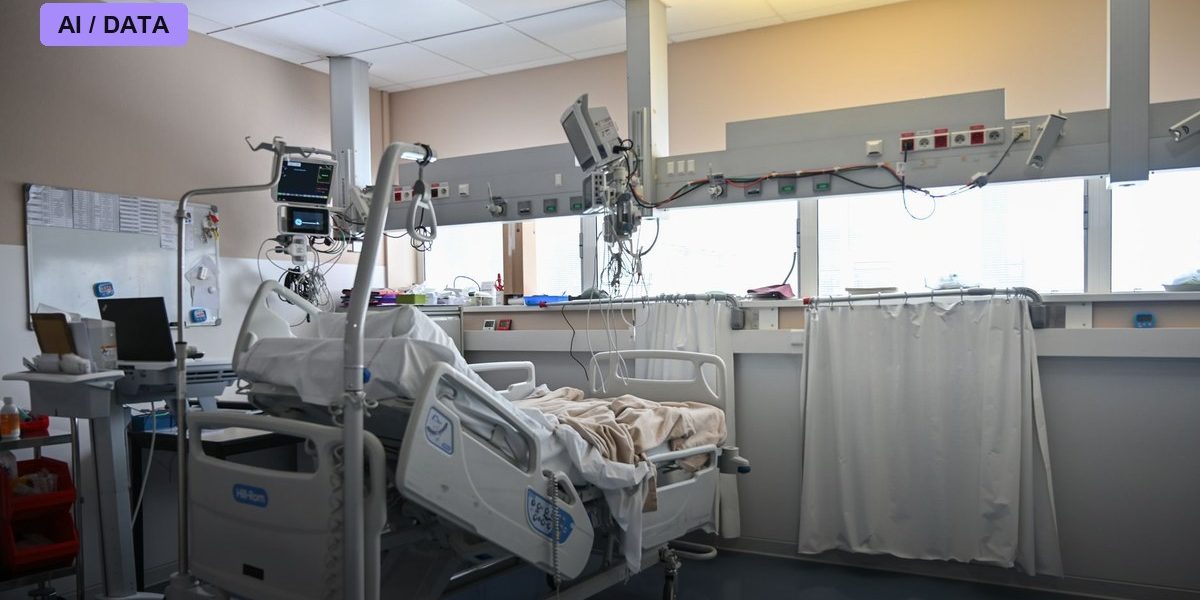
The scale of the underlying problem is part of why ARPA-H chose to fund this project at this size. Roughly 4.6 million Americans are treated in intensive care units each year, at an estimated collective cost of about $70 billion annually, and a meaningful share of that spending goes toward patients whose critical illness drags on longer than necessary because clinicians are, in effect, guessing at the right intervention using incomplete, lagging information. If the digital twin approach works as designed, the research team’s internal projection is that it could cut ICU length of stay by at least 25 percent, a reduction that would represent billions of dollars in savings system-wide if it held up at scale, not to mention the clinical benefit of shorter, less complicated ICU stays for patients.
Believers and Skeptics
Supporters of the approach, including ARPA-H’s own program leadership, argue that critical illness is exactly the kind of problem current medicine handles poorly: a fast-moving, highly individualized process that outstrips what a rotating team of residents and attendings can track by hand, and one where even small improvements in timing or treatment selection could meaningfully change outcomes. Skeptics, including some critical care researchers who have watched earlier generations of computerized clinical decision support promise similar gains, note that modeling the immune system with enough fidelity to safely guide real treatment decisions is an extraordinarily hard problem, and that digital twin projects in other fields have frequently taken far longer to reach practical use than initial funding timelines suggested. The project’s own structure reflects some of that caution: it devotes its first three years purely to developing and validating the model in a research setting before any live clinical testing begins.
A Five-Year Road From Model to Bedside
ReSCUED’s own timeline is explicit about the gap between funding and frontline use: the first three years are dedicated to building and validating the digital twin, with experimental testing and eventual clinical trials to follow only in later phases. UVM is not working alone, drawing in partners including Wake Forest University School of Medicine, the University of Alabama at Birmingham, Washington University School of Medicine, and private-sector collaborators DNA Medicine Institute and InflammaSense. Whether a model built today will still look cutting-edge by the time it reaches an actual ICU bedside in the early 2030s is an open question, but the size of the bet, and the specificity of its 25 percent target, make ReSCUED one of the more closely watched digital twin efforts in American medicine.
Photo: Stéf -b. / PEXELS via Pexels