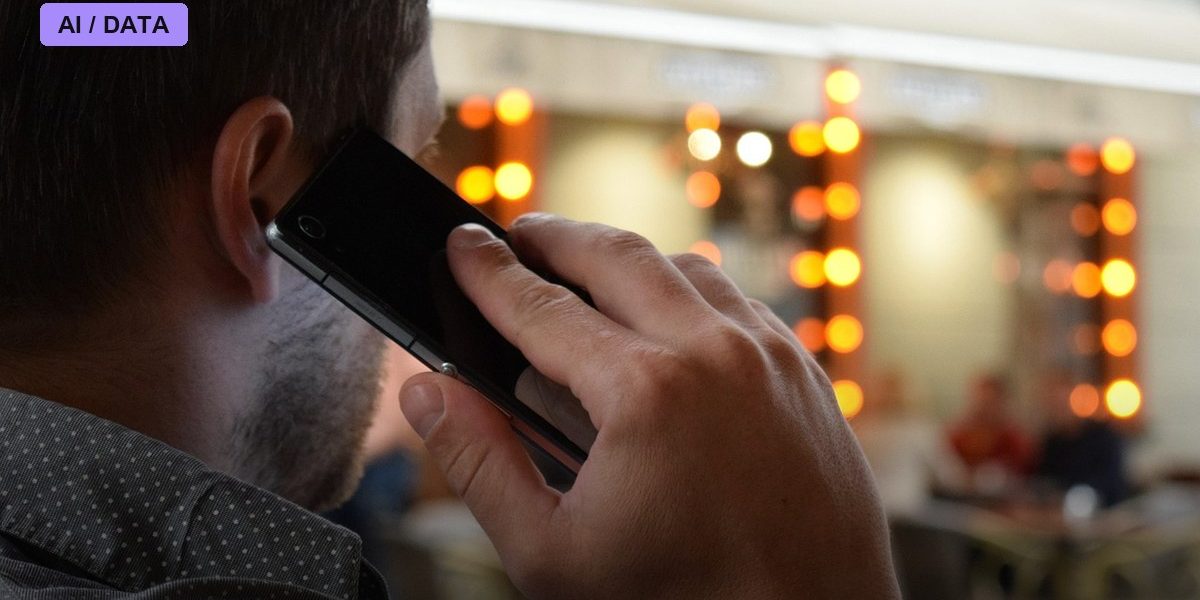
A phone rings, and the voice on the other end sounds exactly like a panicked grandchild, describing a car crash or an arrest and begging for money to be wired immediately. Except there was no crash. The voice was generated by AI from a few seconds of audio scraped off a social media video, and the Federal Trade Commission says it fielded roughly 250,000 complaints tied to AI voice-cloning scams in the first quarter of 2026 alone, part of a wave Interpol data shows has grown 340% year over year.
Three Seconds of Audio Is All It Takes
What used to require Hollywood-grade equipment now runs on consumer AI tools that can clone a voice from as little as three seconds of sample audio, according to fraud researchers tracking the scam’s evolution. Scammers pull that audio from voicemail greetings, TikTok clips, Instagram stories or any other public recording, feed it into a cloning model, and generate new sentences in that same voice that the real person never spoke. Reported exposure to this specific scam has reached roughly one in four people surveyed, with individual losses running as high as $15,000 per incident.
The Playbook: Urgency Over Verification
The scam’s mechanics exploit a predictable weak point in human judgment: panic short-circuits verification. Fraudsters build in small excuses — a broken nose, a bad phone connection, background noise from a “hospital” — to explain away any residual artifacts in the cloned voice, then apply maximum time pressure, insisting the money has to move now, before a supposed bail hearing or before a hospital deadline. Adults over 50 have been identified as the fastest-growing target group for the scam in 2026, in part because grandparent-style emergency calls have historically worked on that demographic even before AI made the voice itself convincing.
Financial Institutions Are Building New Defenses
Banks have started incorporating anti-cloning guidance directly into fraud alerts and customer communications, urging account holders to treat any urgent request for a wire transfer from a “family member” with the same suspicion as an unsolicited email link. The recommended countermeasure that fraud investigators repeat most consistently is deceptively low-tech: hang up and call the family member back on a saved, verified number rather than continuing the conversation on the incoming call, since a genuine emergency will hold up to that thirty-second delay while a scam typically will not.
Family Safe Words Versus Corporate Detection Tools
Two different camps have emerged around how to fight the problem. Consumer advocates favor low-cost, immediate household defenses — agreeing on a private safe word with elderly relatives that a scammer’s AI clone would have no way to know, since it can only reproduce a voice, not a fact never spoken aloud. Technology companies, by contrast, are pitching detection-side solutions: audio watermarking standards, carrier-level call authentication, and bank-side voice biometric checks meant to flag synthetic audio before a transfer clears. Consumer groups note that detection tools take years to deploy universally across every bank and carrier, while a safe word can be adopted in one dinner conversation, making the low-tech option the only one available to most families today.
Platforms Under Pressure to Limit Raw Material
Because the scam depends on publicly available audio, some pressure has shifted toward social platforms themselves, with advocates arguing that easily scraped, unlisted voicemail greetings and public video audio are effectively raw material libraries for cloning tools. Platforms have been slow to build in protections specifically aimed at voice cloning, in part because distinguishing a legitimate parody or dub from a scam-oriented clone at upload time remains a hard technical problem.
What’s Next
Expect state attorneys general and the FTC to keep pushing wire-transfer and gift-card retailers to add friction — mandatory delays or in-person verification for large or unusual transfers — as a practical backstop while voice-authentication technology matures. In the meantime, fraud investigators are urging families to treat the safe-word conversation as seriously as they would a fire escape plan: something set up in advance, not improvised in the middle of a call that has already convinced them someone they love is in danger.
Photo: Mimzy / PIXABAY via Pixabay