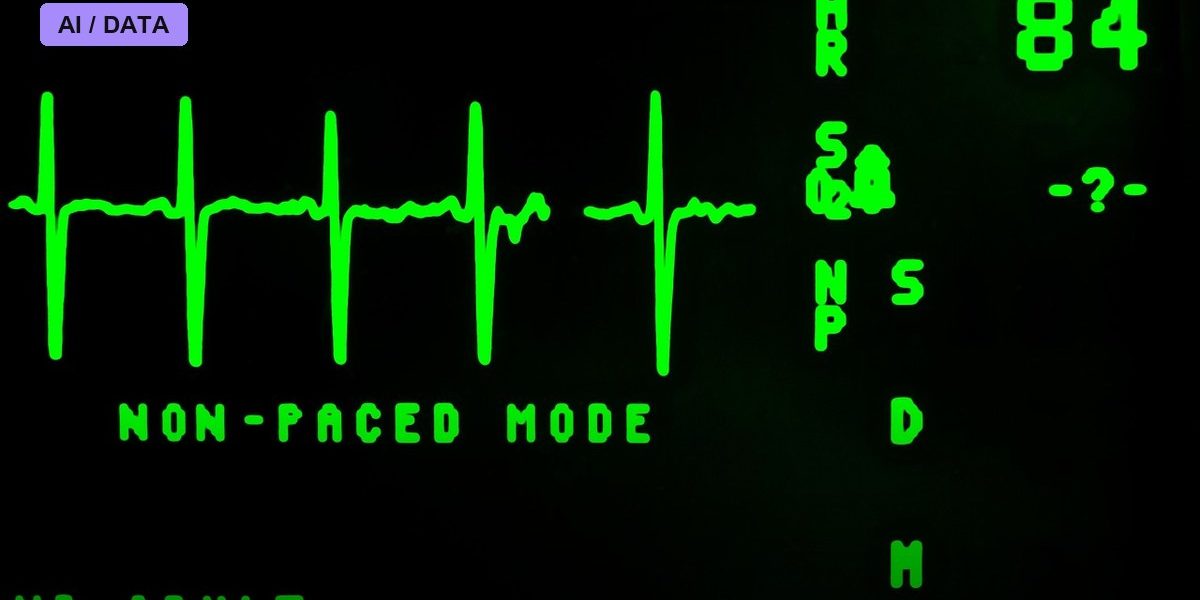
A heart test that takes ten seconds and costs almost nothing has just gained a new superpower. Tempus AI announced that the Food and Drug Administration cleared its software, Tempus ECG-MR, to scan standard 12-lead electrocardiograms for subtle signs of moderate or severe mitral regurgitation, a leaky heart valve condition that often goes undiagnosed until it causes serious damage.
A Common Test Doing an Uncommon Job
Mitral regurgitation occurs when the heart’s mitral valve fails to close properly, allowing blood to flow backward into the left atrium instead of forward into the body. Left unchecked, it can lead to atrial fibrillation, heart failure and premature death. Diagnosing it typically requires an echocardiogram, an imaging test that is more expensive, slower to schedule and far less available than a basic ECG. Tempus ECG-MR is designed to flag patients who show electrical signatures associated with the condition on an ordinary ECG, prompting a follow-up echocardiogram before symptoms become severe.
Why Undiagnosed Valve Disease Is a Bigger Problem Than It Sounds
Cardiologists have long known that structural heart disease, including valve disorders, is substantially underdiagnosed in the general population because early moderate regurgitation often produces no symptoms at all. Patients frequently learn they have the condition only after a cardiac event forces emergency imaging. By the time regurgitation becomes severe, treatment options narrow to surgical valve repair or replacement, procedures that carry higher risk when performed on a damaged, enlarged heart rather than one caught earlier.
How the Tool Works in Practice
Tempus ECG-MR analyzes the waveform data already generated during a routine ECG, a test performed billions of times a year in primary care offices, emergency rooms and cardiology clinics. The software applies a machine learning model trained on paired ECG and echocardiogram data to estimate the likelihood that a patient has moderate or severe regurgitation, then flags high-risk results for clinicians to order follow-up imaging. Because it works on hardware already installed in nearly every clinic, the tool does not require new equipment purchases, only a software license and integration with existing systems.
Cardiologists Split Between Enthusiasm and Caution
Supporters argue that AI-assisted ECG screening could meaningfully close a diagnostic gap, particularly in rural and underserved areas where echocardiography is scarce or requires long waits. Critics within cardiology, however, caution that any AI flagging tool needs careful validation across diverse patient populations, since ECG waveforms vary by age, sex, body habitus and race, and a model trained on an unrepresentative dataset could underperform for exactly the patients who most need early detection. There is also concern about downstream costs: a flood of AI-flagged referrals for echocardiograms could strain already-stretched imaging capacity if the tool’s false-positive rate is too high.
What Comes Next
Tempus has positioned ECG-MR as part of a broader push to extract more diagnostic value from cheap, ubiquitous tests using AI, following a wave of similar clearances for ECG-based detection of conditions like low ejection fraction and atrial fibrillation risk. The company is expected to pursue real-world outcomes data showing whether earlier detection through the tool actually changes treatment timing and reduces downstream heart failure hospitalizations, evidence that payers will likely require before covering widespread screening. For now, hospitals adopting the software are watching closely to see whether it delivers on the promise of turning a decades-old test into a modern early-warning system.
Photo: PublicDomainPictures / PIXABAY via Pixabay