Hours after Tesla began charging fares for rides in its steering-wheel-free Cybercab in Austin on September 3, 2026, federal safety regulators opened a formal inquiry into how the company decided the vehicle was legal to put on public roads in the first place.
A vehicle built with no way for a human to take over
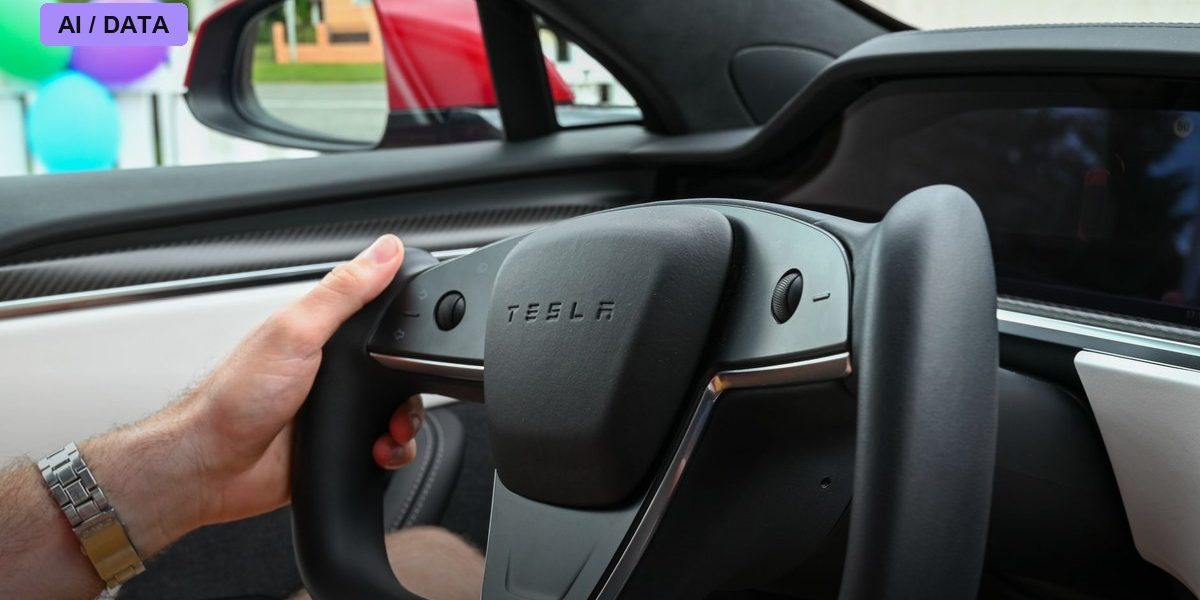
The Cybercab is a two-seat robotaxi built without a steering wheel, pedals or side mirrors, meaning there is no traditional way for an occupant to intervene if the automated driving system runs into trouble. Tesla began commercial paid service with the vehicle in Austin on September 3, expanding beyond the supervised pilot rides the company had run previously. Federal law requires manufacturers to self-certify that new vehicles meet all applicable Federal Motor Vehicle Safety Standards, or FMVSS, before selling or operating them — a system built on trust in the manufacturer’s own testing and documentation rather than pre-approval by regulators. That framework was written decades ago around vehicles that assumed a licensed human driver sitting behind a wheel, which is exactly the assumption Tesla’s design abandons entirely.
NHTSA moves fast, then moves further
The National Highway Traffic Safety Administration opened Audit Query AQ26002 the same day Tesla began charging fares, targeting roughly 1,000 Cybercabs operating in the Austin market. An audit query lets NHTSA examine the technical data and internal processes a manufacturer relied on to self-certify compliance, rather than testing how well the vehicle actually drives. On September 10, the agency escalated the matter from an audit query to a formal Special Order, a more forceful legal instrument that compels Tesla to produce specific documentation, with a response deadline set for September 30, 2026.
What regulators are and aren’t examining
Crucially, the audit is not a real-world performance review of how safely the Cybercab drives itself in traffic; NHTSA has explicitly framed it as a review of whether Tesla followed the proper process when it declared the vehicle compliant with federal safety standards despite lacking the manual controls those standards were originally written around. NHTSA has not issued any safety defect finding and has not ordered Tesla to pause the Austin service, which continues to operate while the Special Order process plays out.
Why the stakes go beyond one vehicle
Industry observers see the case as an early test of how the self-certification system, designed decades ago for conventional cars, holds up against a vehicle engineered from the ground up without the assumption that a human occupant can grab a wheel. If NHTSA concludes Tesla’s certification basis was inadequate, it could set a precedent affecting not just Cybercab but every future steering-wheel-free vehicle design from any manufacturer seeking to rely on the same self-certification pathway rather than a bespoke regulatory exemption. Rival Waymo, by contrast, has so far deployed its robotaxi fleet on vehicles that retain a steering wheel and pedals even though no human uses them, a design choice that has kept its vehicles inside a more conventional certification path — making Tesla’s fully controls-free approach a genuine outlier the agency has not had to evaluate at this scale before.
Supporters and skeptics of the audit
Tesla and its supporters argue that the company has years of real-world supervised and driverless operating data behind its FMVSS compliance basis, and that regulatory scrutiny should not be mistaken for evidence of an actual safety problem — audits are a normal part of the self-certification system working as designed. Consumer-safety advocates and some former NHTSA officials counter that a vehicle with no manual controls at all is exactly the kind of genuinely novel design where the agency should be least willing to simply accept a manufacturer’s own compliance paperwork at face value, especially given Tesla’s history of regulatory disputes over its driver-assistance systems’ safety claims.
What to watch by month’s end
Tesla’s September 30 deadline to respond to the Special Order is the next concrete milestone, and how thoroughly the company’s answer satisfies NHTSA will determine whether the matter escalates toward a recall-style safety finding or is resolved as a paperwork correction. Either way, the Austin service is likely to remain a closely watched proving ground, both for Tesla’s robotaxi ambitions and for how far federal regulators are willing to stretch a decades-old self-certification framework to cover vehicles that were never supposed to need a human at the wheel.
Photo: Vladimir Srajber / PEXELS via Pexels