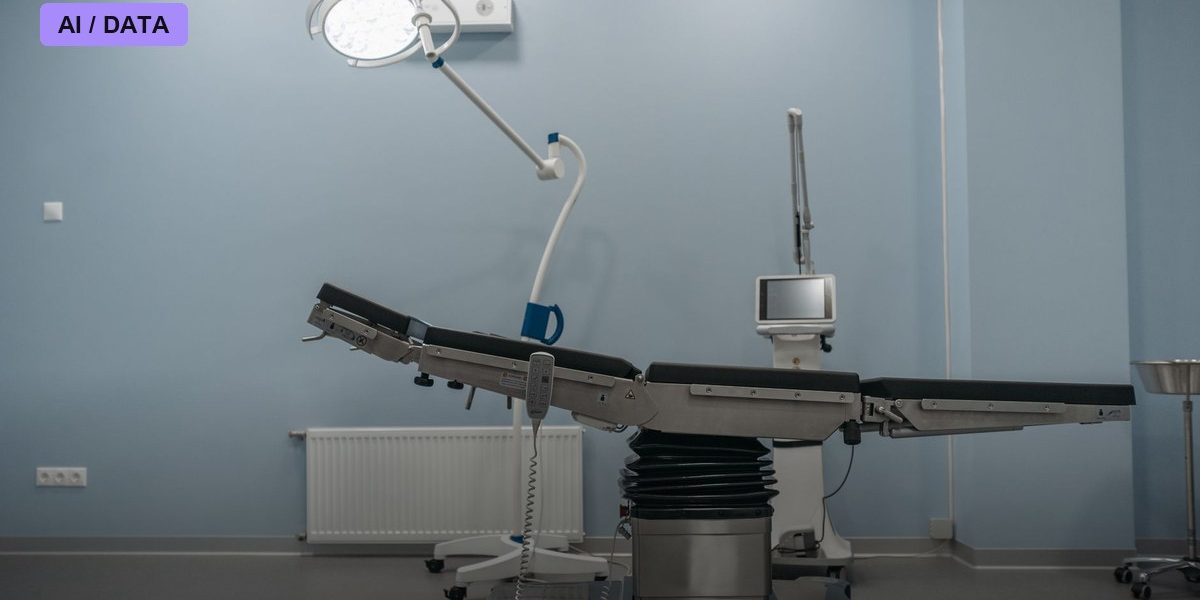
Revolve Surgical, a Canadian robotics startup backed by Y Combinator, announced on March 17, 2026 that it had received FDA 510(k) clearance for a surgical robot platform the company describes as first-in-class and “zero-footprint,” meaning the entire system mounts directly to the operating table rather than anchoring to the floor like the conventional robotic towers made by larger competitors.
What makes the design different
Traditional surgical robotics platforms, including systems from Intuitive Surgical and Medtronic, rely on floor-mounted carts and arms that surgical staff must wheel into position and dock to the patient before a procedure begins. Revolve’s system instead attaches a reusable robotic arm directly to the rail of the operating table, according to reporting from MassDevice and Becker’s ASC, eliminating the docking process and the physical bulk that comes with a standalone cart. The company markets the device as providing robotic assistance that augments a surgeon’s own hand movements during soft-tissue procedures, with the surgeon retaining direct control throughout.
The clearance and what it covers
The 510(k) clearance covers a general surgery indication for soft-tissue procedures, according to MassRobotics and OBIO’s coverage of the announcement. Revolve has said it plans to begin pilot studies under this initial clearance and is targeting an expanded clearance covering the full range of laparoscopic surgery before it moves to a commercial launch, a sequencing common among newer robotic-surgery entrants that secure a narrower first indication and broaden it over time.
The "physical AI" framing
Revolve has been explicit that this device is a stepping stone rather than an end state. According to coverage of the company’s public statements, its stated long-term goal is enabling "physical AI" in operating rooms at scale — language that signals ambitions well beyond today’s surgeon-driven robotic assistance and toward systems capable of greater autonomous or semi-autonomous action during surgery. That ambition places Revolve within a small but growing cohort of surgical-robotics companies explicitly pursuing higher levels of autonomy, a trend a 2024 systematic review in a peer-reviewed surgical journal noted was still rare among FDA-cleared devices, most of which remain firmly surgeon-controlled.
A crowded, capital-intensive field
Revolve enters a market where incumbents have enormous installed bases and deep hospital relationships. Medtronic alone received FDA clearance in February 2026 for its Stealth AXiS spine surgery system and has separately been seeking expanded indications for its Hugo robot in general and gynecological surgery. Surgeons who have spent years training on established platforms are a difficult audience to win over with a smaller company’s first-generation device, and hospital purchasing committees typically want years of case volume and outcomes data before committing capital budgets to a new robotics vendor — a skepticism common among device-evaluation committees weighing unproven zero-footprint designs against established, well-capitalized competitors with long clinical track records.
Why footprint matters to hospitals
Operating rooms are expensive, space-constrained real estate, and many hospitals, particularly smaller community facilities and ambulatory surgery centers, have balked at retrofitting rooms to accommodate bulky robotic towers. A system that clips onto an existing table without requiring a dedicated bay could lower the capital and space barriers that have kept robotic-assisted surgery concentrated in larger academic and quaternary-care hospitals, extending the technology’s reach into smaller surgical centers that could not previously justify the investment.
What’s next
Revolve’s near-term milestones are the pilot studies it has said it will run under the current clearance and the follow-on regulatory submission it is targeting for expanded laparoscopic indications. Whether the company can translate a compact, capital-efficient design into real hospital adoption will depend on how those pilots perform against the safety and efficiency benchmarks set by entrenched competitors, and on how quickly Revolve can move from a single general-surgery indication to the broader case mix that would make the platform commercially viable at scale. Investors backing the company, including Y Combinator, are betting that a lower price point and smaller physical footprint could open up robotic-assisted surgery to hospitals that have so far sat out the robotics wave entirely because of cost, and that early clinical data from the pilot studies will be the deciding factor in whether that bet pays off. Surgeons who adopt the platform in its first indication will effectively be generating the real-world evidence base the company needs to support its planned expansion, making the coming pilot phase as much a proving ground for Revolve’s broader autonomy ambitions as it is a commercial launch.
Photo: Pavel Danilyuk / PEXELS via Pexels