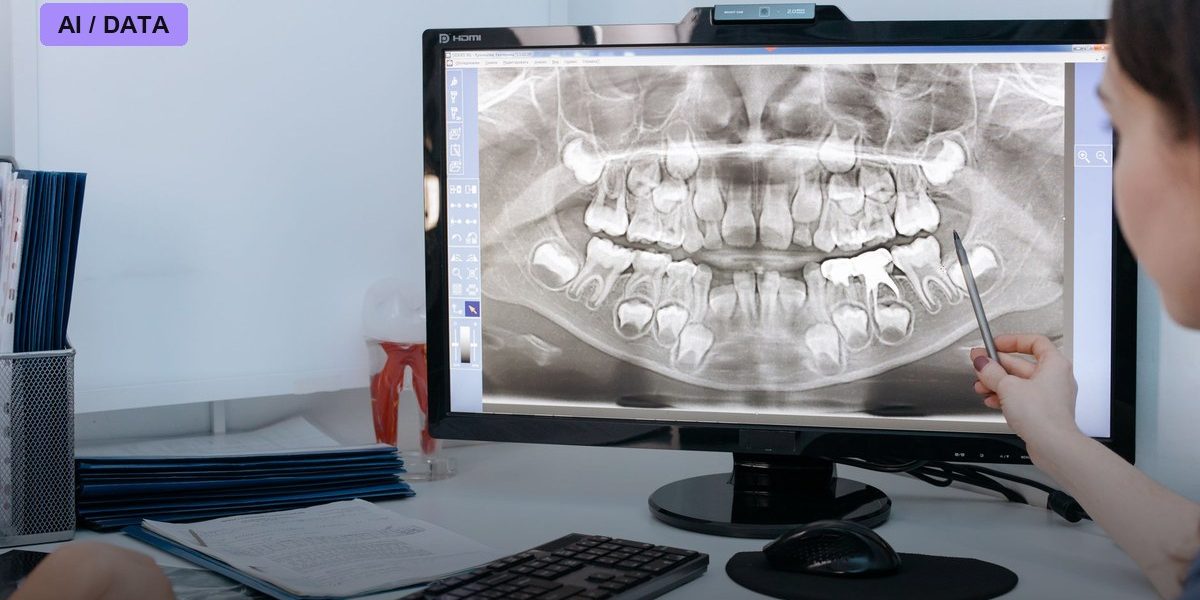
Dental AI company Pearl has spent the past year methodically collecting FDA clearances until, as of December 2025, its Second Opinion software became the first dental AI system cleared to read both 2D and 3D dental imaging — intraoral bitewing and periapical X-rays, panoramic radiographs, and cone-beam CT scans — putting a single AI review layer over nearly every type of image a general dentist or oral surgeon might take.
How the Clearances Stacked Up
Pearl’s Second Opinion first won FDA 510(k) clearance in March 2022 for intraoral X-rays, making it the first AI system cleared in the U.S. to detect a broad range of dental conditions on radiographs at all. The company then added automated bone-level measurement and a pediatric-specific indication in May 2025, followed by Second Opinion 3D for cone-beam CT imaging that same month, and finally panoramic radiograph detection in December 2025 — the clearance that completed its coverage across essentially every dental X-ray format in routine use.
What the Software Catches That Dentists Sometimes Miss
Second Opinion is trained to flag up to 18 distinct findings per image, including early-stage and progressed cavities, calculus buildup, periapical radiolucencies suggesting infection at a tooth root, bone loss patterns associated with periodontal disease, and existing dental work like crowns, bridges, implants and root canals. In a published clinical study cited by the company, diagnostic accuracy for operators improved from 82% to 98% when supported by Pearl’s AI, and dental practices using the system reportedly identified 37% more disease on average compared with unassisted reads.
Why Cavities Get Missed in the First Place
Dental radiograph interpretation has long been recognized as inconsistent even among trained clinicians, particularly for early-stage caries that appear as subtle shadows rather than obvious dark voids, and for periapical infections that can be easy to overlook in a routine bitewing series read quickly during a busy appointment schedule. The American Dental Association has for years flagged interobserver variability in radiograph reading as a persistent quality issue, which is part of the rationale AI vendors like Pearl use to justify software that flags every image for a second, consistent look before the dentist finalizes a diagnosis.
Guardrails the Profession Is Putting in Place
As AI reads have become more common in dental offices, the American Dental Association published guidance in February 2026 clarifying that dentists remain fully liable for any diagnosis or treatment decision made using AI recommendations — explicitly establishing that tools like Second Opinion are decision-support aids, not autonomous diagnosticians a dentist can defer to. That guidance reflects a broader industry effort to keep pace with adoption: AI-assisted X-ray analysis has moved from a novelty into what industry publications now describe as mainstream technology for forward-thinking dental practices heading into 2026.
Skeptics Still Want More Independent Data
Not everyone in dentistry is fully sold. Some clinicians and dental researchers note that the 98% accuracy and 37% additional-disease figures come primarily from Pearl’s own published or company-sponsored studies, and want to see more independent, multi-practice trials before treating AI-flagged findings as equivalent to a specialist’s read, particularly for borderline or early-stage lesions where AI models are more prone to false positives that could lead to unnecessary treatment recommendations and added costs for patients.
Where This Goes From Here
With clearances now covering essentially the full range of dental imaging formats, Pearl’s next competitive battleground is likely integration — getting its AI built directly into the practice management and imaging software dentists already use, rather than requiring a separate upload step, and expanding into new indications like early orthodontic assessment or oral cancer screening. Rival dental AI vendors, including Overjet, are pursuing similar clearance strategies, meaning the next year is likely to bring a wave of comparative studies as insurers and dental service organizations start asking which AI system actually catches more disease per dollar spent, rather than taking any single vendor’s clinical claims at face value.
Photo: cottonbro studio / PEXELS via Pexels