Radiologists at Yale New Haven Health System read through hundreds of thousands of scans a year, and increasingly the bottleneck is not spotting the abnormality on the image, it is writing up the report afterward. That administrative drag is what Yale New Haven Health System and radiology AI company Rad AI are now targeting head-on, announcing on June 10, 2026, a strategic partnership that will deploy Rad AI’s reporting tools across the health system’s entire imaging network.
A Network-Wide Rollout, Not a Pilot Program
The deployment spans more than 16 outpatient imaging centers and five hospital campuses across Yale New Haven Health System, which together manage more than 700,000 radiology exams a year. Rather than testing the technology at a single flagship site, YNHHS is deploying Rad AI across its full network from the outset, a scale that reflects how far AI-assisted reporting has moved from experimental pilot to standard infrastructure at large academic health systems.
The partnership is structured as co-development rather than a simple licensing deal. Christopher Whitlow, MD, PhD, YNHHS’s Radiologist-in-Chief and Chair of the Department of Radiology and Biomedical Imaging at Yale School of Medicine, said the health system needed a partner willing to build alongside its radiologists rather than hand over an off-the-shelf product. “As an academic medical center, our priority is always to advance the quality of patient care,” Whitlow said, adding that Yale “required a true co-development partner” for the work.
What the Technology Actually Automates
Rad AI’s tools are aimed squarely at the administrative side of radiology: automating and streamlining the reporting process, reducing documentation burden, cutting down on repetitive speech corrections during dictation, and eliminating manual data entry that has historically slowed radiologists down between reading a scan and finalizing a report. Rad AI co-founder and chief executive Doktor Gurson framed the company’s design philosophy around fitting into existing clinical routines rather than adding new steps. “Reporting software must work naturally within the clinical workflow, not create more friction for the teams delivering care,” Gurson said.
How Radiology Got Here
The push toward AI-assisted reporting reflects a broader reckoning within radiology about where AI actually helps. For years, the industry narrative around AI in imaging focused on diagnostic detection, algorithms trained to spot a nodule, a fracture, or a hemorrhage that a human might miss. But a growing body of practitioner sentiment, reflected in recent industry commentary, holds that radiologists are less often missing findings than they are being buried in the cognitive and administrative load of documenting what they already found. That reframing has pushed companies like Rad AI, and competing efforts such as the January 2026 partnership between Radiology Partners and Stanford’s AI Development and Evaluation Lab focused on monitoring AI safety in imaging, to focus on workflow and reporting automation rather than diagnosis replacement.
Supporters See a Fix for Burnout, Not Just Efficiency
Advocates for AI-assisted reporting argue the technology addresses one of radiology’s most acute workforce problems: a persistent shortage of radiologists nationally, combined with rising imaging volumes, that has pushed burnout rates higher across the specialty. By automating the transcription and formatting work that eats into a radiologist’s day, the argument goes, AI reporting tools free up physician time for the parts of the job that actually require a trained eye, reviewing complex or ambiguous cases, rather than typing out boilerplate language for routine studies. At the scale of 700,000 annual exams, even modest time savings per report compound into a meaningful capacity increase across the system.
Skeptics Warn About Consolidation of Clinical Judgment
Critics of rapid, network-wide AI deployment in radiology raise a different set of concerns: that as AI-generated report language becomes the default starting point for radiologists’ dictation, there is a risk of homogenized, templated reporting that smooths over the nuanced judgment calls that distinguish one case from another. There are also questions about accountability when an AI-assisted report contains an error, and about whether efficiency gains at the reporting stage create pressure to increase read volumes rather than simply reduce physician workload. The Stanford AIDE Lab partnership with Radiology Partners, focused explicitly on continuously monitoring AI tools for safety and reliability, reflects an industry-wide acknowledgment that scaling these systems requires guardrails that keep pace with adoption.
What Comes Next as AI Reporting Scales
Yale New Haven Health System’s decision to deploy Rad AI across its full network rather than a single pilot site signals that health systems are moving past the proof-of-concept phase for AI-assisted radiology reporting and into full operational integration. If the rollout delivers on reduced documentation burden without compromising report quality, expect other academic medical centers to follow with similarly broad deployments rather than incremental pilots. The next test will be whether Rad AI and Yale can show, with hard numbers on turnaround times and radiologist satisfaction, that automating the paperwork side of radiology actually translates into more time for patient care rather than simply more scans read per radiologist per day.
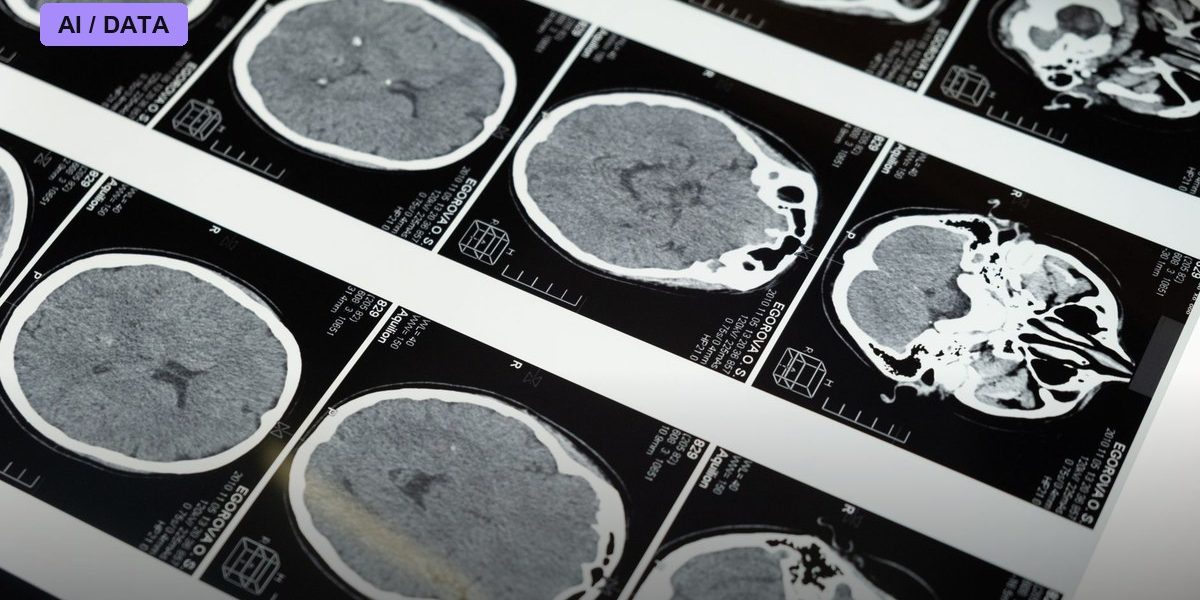
Photo: cottonbro studio / PEXELS via Pexels