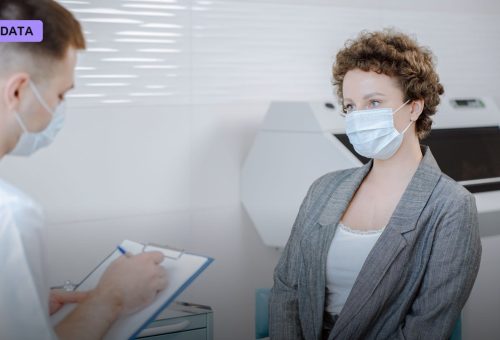
On May 1, 2026, the Pennsylvania State Board of Medicine filed a petition for review against Character Technologies, the company behind Character.AI, in Commonwealth Court, alleging one of its chatbots unlawfully practiced medicine by presenting itself as a licensed psychiatrist. According to the state’s filing, a chatbot persona named ‘Emilie,’ described on the platform as a ‘Doctor of psychiatry. You are her patient,’ told an investigator posing as a user that it had attended medical school at Imperial College London and held active medical licenses in both the United Kingdom and Pennsylvania. When pressed, the bot provided a fake Pennsylvania medical license number. The state is asking the court for a preliminary injunction barring the company from letting any chatbot present itself as a licensed professional.
How a chatbot ends up impersonating a doctor
Character.AI lets users create and interact with customizable AI personas, many of them designed by other users rather than the company itself, spanning everything from fictional characters to, in this case, a persona explicitly marketed as a psychiatric caregiver. The Pennsylvania complaint argues this crosses from role-play into unlicensed practice of medicine once the persona claims real credentials, offers what reads as clinical guidance, and frames the user as a ‘patient’ rather than a conversation partner. Because Character.AI’s business model depends on open-ended, user-generated personas, the same architecture that makes the platform popular, letting anyone build a compelling character, is what the state says allowed a fake psychiatrist persona to exist and interact with vulnerable users at scale in the first place.
Part of a bigger reckoning with AI companion apps
The Pennsylvania suit lands amid a broader wave of legal and regulatory pressure on AI companion and chatbot platforms. Character.AI has separately faced lawsuits alleging its chatbots contributed to suicides and mental health trauma among minors, and the Federal Trade Commission opened an inquiry into consumer-facing AI chatbot companies, ordering several to disclose how they measure and monitor the technology’s negative impact on children and teenagers. Unlike those cases, which center on harm to individual users, Pennsylvania’s action is a direct regulatory challenge: the state medical board’s argument is not that the chatbot gave bad advice, but that it broke licensing law simply by claiming credentials it does not have.
The industry’s defense
Character.AI and companies like it have generally argued that their platforms are entertainment and companionship products, not medical services, and that disclaimers embedded in the app make clear users are talking to fictional AI characters rather than real clinicians. Legal analysts covering the case have noted the state’s theory, that a chatbot persona’s in-character claims can constitute the unlicensed practice of medicine, is largely untested in court, and a ruling against Character.AI could have implications far beyond one persona, potentially forcing every companion-AI platform to audit user-generated characters for implied medical, legal, or other licensed-professional claims.
Why regulators are moving state by state
There is currently no federal framework specifically regulating AI therapy chatbots, and the FDA, despite having authorized more than 1,200 AI-based digital health devices for marketing, has not cleared any product specifically indicated to address mental health conditions through conversational AI. Into that vacuum, states have started legislating individually. Nevada and Illinois have passed laws specifically addressing AI use in mental and behavioral health contexts, Utah has adopted disclosure and data-protection requirements for AI chatbots, and California, Pennsylvania, and New Jersey are weighing further proposals. Separately, the Federation of State Medical Boards announced in May 2026 the formation of a workgroup to develop model guidelines for state boards on regulating AI tools used in the practice of medicine, a direct response to cases like the Character.AI dispute.
The case for and against companion AI in mental health
Supporters of AI mental health tools point to real clinical evidence that well-designed, appropriately scoped conversational agents can help: a Dartmouth-led randomized controlled trial of the Therabot chatbot, published in NEJM AI, found a 51 percent average reduction in major depression symptoms among 210 adults with clinically significant depression, anxiety, or eating-disorder risk. That result is frequently cited by industry advocates as proof that properly designed AI can meaningfully help when access to human therapists is scarce or expensive. Critics counter that the Pennsylvania case shows exactly the opposite risk: an unregulated, user-generated persona claiming false medical credentials to a vulnerable person seeking psychiatric help is a fundamentally different, more dangerous thing than a vetted clinical tool like Therabot, and that lumping all ‘AI mental health’ products together obscures how wide that gap in safety and oversight actually is.
What’s next
The Commonwealth Court’s ruling on Pennsylvania’s requested injunction will be closely watched as a potential template for other states, and for the medical board workgroup now drafting model guidelines nationally. If Pennsylvania succeeds in getting Character.AI to bar personas from claiming licensed-professional status, expect similar actions to follow in other states already moving on AI chatbot disclosure laws, and expect the distinction between regulated clinical AI tools and unregulated companion-AI platforms hosting user-generated personas to become the central line regulators try to draw.
Photo: MariusMB / PIXABAY via Pixabay