Eli Lilly announced in late March 2026 a research and licensing agreement with Insilico Medicine worth up to $2.75 billion, one of the largest AI-driven pharmaceutical deals ever signed. Insilico gets $115 million guaranteed upfront, with the rest contingent on development, regulatory, and commercial milestones plus tiered royalties if the drugs eventually reach the market. Lilly, in exchange, gets exclusive worldwide rights to a portfolio of preclinical drug programs across multiple therapeutic areas, plus access to Insilico’s Pharma.AI platform to run additional discovery programs targeting whatever Lilly chooses next.
Who Insilico is and how it got here
Insilico Medicine, headquartered across Hong Kong and the United States, has spent close to a decade building generative AI models meant to design drug candidates rather than merely screen existing compound libraries faster. The company has developed at least 28 drug candidates using generative AI, with nearly half of them already reaching a clinical stage of testing. Its signature achievement came in 2023, when a drug it designed entirely through generative AI became the first such candidate to enter human Phase II trials, for idiopathic pulmonary fibrosis, a milestone that reframed what ‘AI drug discovery’ could plausibly mean beyond a marketing phrase. Lilly and Insilico have in fact been quietly collaborating since 2023, meaning the March 2026 deal formalizes and dramatically scales up a relationship that predates the current AI-in-pharma boom.
What the deal structure actually says about risk
The eye-catching $2.75 billion headline number obscures a more cautious reality: only the $115 million upfront payment is guaranteed. The programs being licensed are still preclinical, meaning they have not yet been tested in humans, and the years of development between a preclinical candidate and an approved drug carry substantial attrition risk, historically over 90 percent for compounds that never make it to market at all. Lilly is not buying a finished drug, it is buying optionality: the right to advance Insilico’s AI-designed candidates through its own much larger clinical and regulatory infrastructure, paying Insilico progressively more only as, and if, each program clears successive hurdles.
The wider AI drug discovery race
Insilico is not the only AI-native biotech Big Pharma is courting aggressively in 2026. Isomorphic Labs, the drug-discovery spinout from Google DeepMind led by Demis Hassabis, raised a $2.1 billion Series B and separately signed its own roughly $1.75 billion partnership with Lilly, with Hassabis publicly committing to get Isomorphic’s first AI-designed drug candidate into Phase 1 trials by the end of 2026, a promise that as of mid-year the company had not yet delivered a disclosed clinical candidate against. Recursion Pharmaceuticals, meanwhile, has five active clinical programs including an oncology candidate in trials, and industry trackers point to Recursion as having the nearest-term clinical readouts among the major AI drug-discovery players. Lilly’s parallel bets on both Insilico and Isomorphic suggest the company is deliberately diversifying across AI drug-discovery approaches rather than picking one partner to consolidate around.
The optimistic case
Supporters of the AI drug discovery model argue that generative design compresses the earliest, slowest phase of pharmaceutical R&D, identifying a viable molecule against a target, from years down to months, and that Insilico’s track record of already moving nearly half its 28 AI-designed candidates into clinical testing is empirical evidence, not speculation. From this view, Lilly’s willingness to commit $2.75 billion in potential payments for still-preclinical assets reflects genuine confidence that Insilico’s Pharma.AI platform, which spans target identification through compound design, systematically outperforms traditional discovery timelines, and that paying a premium for that speed is rational given how much a single approved drug can be worth.
The skeptical case
Critics of the AI-pharma hype cycle point out that ‘AI-designed’ has become a loosely applied label, and that no AI-originated drug has yet completed the full journey to FDA approval and broad clinical use, meaning the entire model remains unproven at the only milestone that ultimately matters. The gap between Isomorphic Labs’ well-funded promises and its as-yet-undisclosed clinical candidate is frequently cited as a cautionary example: raising billions and signing pharma partnerships is not the same as producing a drug that survives Phase 1, Phase 2, and Phase 3 trials. Insilico’s own pipeline, while further along than most competitors, still has the majority of its clinical-stage candidates in early trials, where failure rates remain high regardless of how the molecule was originally designed.
What’s next
Watch for two things over the rest of 2026: whether any of the preclinical programs Lilly just licensed from Insilico advance into human trials, which would be the first concrete evidence the deal is producing rather than merely funding potential, and whether Isomorphic Labs actually delivers Hassabis’s promised Phase 1 candidate by year-end. Recursion’s multiple near-term clinical readouts may end up being the more immediate test case for whether AI-originated drugs can clear the human-trial bar at all, regardless of which company’s name ends up on the eventual approval.
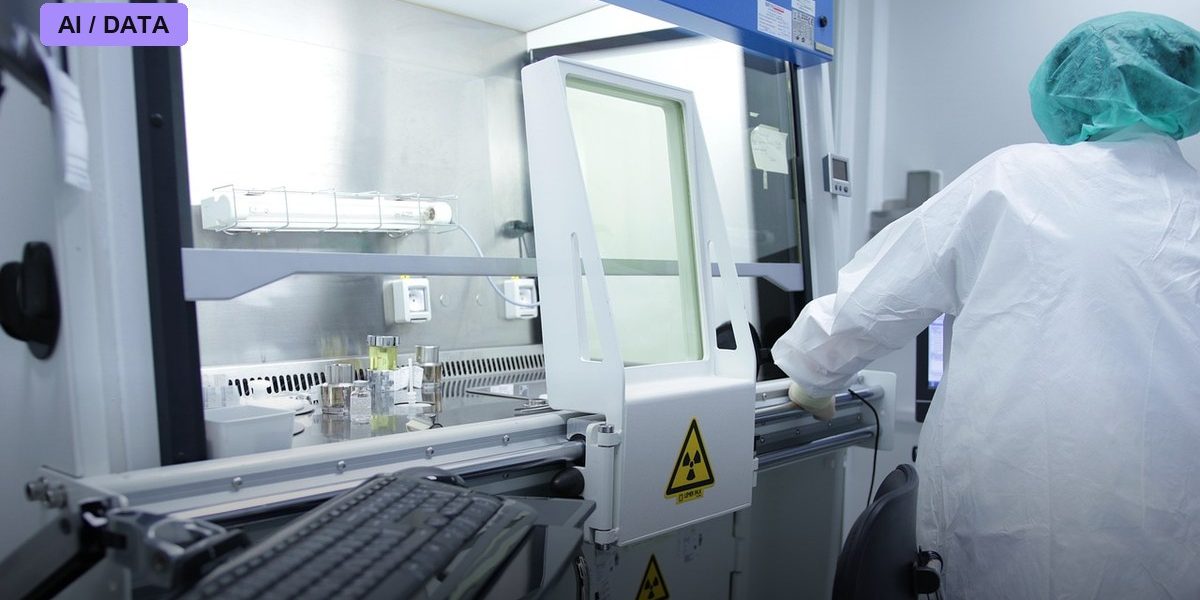
Photo: OsloMetX / PIXABAY via Pixabay