The U.S. Food and Drug Administration on May 12, 2026, cleared the Targeted Real-Time Early Warning System, known as TREWS, an artificial intelligence tool developed at Johns Hopkins University and commercialized by Bayesian Health. The clearance marks a regulatory first: no other authorized test or device has been shown to monitor patients for sepsis before a clinician even suspects the condition. TREWS combines machine learning algorithms with continuously streaming electronic health record data, scanning vital signs, lab values, and clinical notes to surface a warning as early as two to 48 hours before conventional detection methods would catch it. Sepsis, a life-threatening overreaction of the body’s immune system to infection, is associated with roughly one in three in-hospital deaths in the United States and kills more than 250,000 Americans annually, making early detection one of the most sought-after breakthroughs in acute care.
What TREWS Actually Does
Unlike static sepsis scoring tools that clinicians check periodically, TREWS runs continuously in the background of a hospital’s electronic health record system, recalculating a patient’s risk score in real time as new data arrives. When the model detects a pattern consistent with early sepsis, it pushes an alert directly to the bedside nurse or physician, along with the specific data points driving the score, so clinicians can quickly verify or dismiss the warning. The system was designed to minimize alert fatigue, a chronic problem with earlier generations of sepsis-detection software that flooded clinicians with false positives and were often ignored. Johns Hopkins researchers spent years refining the underlying algorithm and its user interface specifically to earn clinician trust, testing it first in pilot deployments before pursuing the FDA’s Breakthrough Device pathway in 2023.
The Researcher Behind It
TREWS was created by Suchi Saria, a Johns Hopkins professor and director of the university’s AI & Healthcare Lab, working alongside patient safety researcher Albert Wu. Saria has said her motivation traces back to personal loss: she began the work after her nephew died of sepsis in 2017. “No other cleared test or device monitors for sepsis prior to clinician suspicion,” Saria said following the clearance, adding that the approval “is a regulatory first that shifts what the standard of care can be for a condition associated with roughly 1 in 3 in-hospital deaths.” Her broader argument is that the lead time created by pre-suspicion screening is precisely what changes outcomes, since sepsis mortality rises sharply for every hour that treatment is delayed once the condition takes hold.
Who Has Already Deployed It, and With What Results
Even before the FDA clearance, TREWS had already been rolled out at several major health systems, including Cleveland Clinic, MemorialCare in California, and the University of Rochester School of Medicine, alongside dozens of other hospitals across the country. Data collected from those deployments showed that when clinicians acted on the tool’s alerts, sepsis patients were 18% less likely to die in the hospital compared with patients whose sepsis was caught through standard workflows. Hospitals also reported reductions in morbidity and shorter average lengths of stay for affected patients. The FDA clearance now opens the door for participating hospitals to seek reimbursement through the Centers for Medicare and Medicaid Services’ New Technology Add-on Payment program, a mechanism designed to offset the cost of adopting new, clinically beneficial technologies before they become standard billing practice.
A Broader Wave of AI Diagnostics Entering Hospitals
TREWS’ clearance lands amid a broader push by health systems and regulators to bring predictive AI tools into frontline clinical workflows, following earlier momentum around ambient documentation AI and diagnostic imaging algorithms. Sepsis in particular has long been considered a prime target for machine learning because its early symptoms, subtle shifts in heart rate, blood pressure, temperature, and lab markers, are difficult for busy clinicians to catch amid competing demands, but are exactly the kind of pattern recognition problem where algorithms trained on millions of patient records can outperform human intuition. Other companies, including Chicago-based Prenosis with its Sepsis ImmunoScore biomarker, have pursued parallel FDA authorizations using blood-based biomarkers rather than EHR-pattern detection, suggesting hospitals may soon have multiple complementary tools to choose from rather than a single dominant standard.
Clinicians Remain Cautiously Optimistic, Not Uniformly Convinced
Proponents inside health systems that piloted TREWS describe it as one of the few AI tools that has demonstrably changed bedside behavior rather than simply generating another dashboard nobody checks, crediting its low false-alarm design for winning over skeptical nursing staff. But independent critics of hospital AI alerting systems broadly have cautioned that early success in pilot hospitals does not always generalize, noting that alert fatigue, integration costs with legacy EHR systems, and variation in nursing staffing levels across hospitals can blunt real-world performance even for well-validated tools. Patient safety researchers have also pointed out that an early-warning tool is only as effective as the clinical response it triggers, meaning hospitals without adequate staffing or rapid-response protocols may see smaller mortality benefits than those documented in Johns Hopkins’ own affiliated pilot sites.
What Comes Next
With FDA clearance and a path to Medicare reimbursement now in place, Bayesian Health and Johns Hopkins researchers expect a significant acceleration in hospital adoption over the next 12 to 18 months, particularly among mid-sized health systems that previously viewed the technology as too costly to justify without a reimbursement pathway. Saria’s team has indicated it plans to publish additional multi-site outcome data and expand TREWS’ capabilities to flag other time-sensitive deteriorations beyond sepsis, such as early signs of respiratory failure. For an industry still working out how much autonomy to hand AI systems inside the hospital, TREWS’ regulatory clearance offers one of the clearest signals yet that predictive, pre-symptomatic AI alerting is moving from research pilot to reimbursable standard of care.
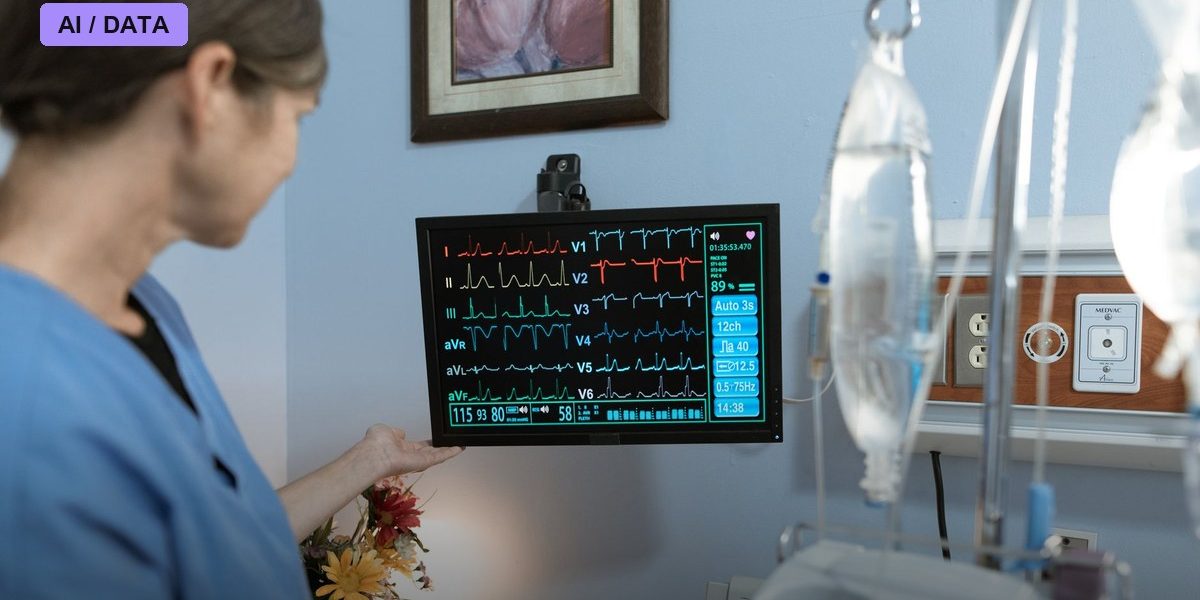
Photo: RDNE Stock project / PEXELS via Pexels