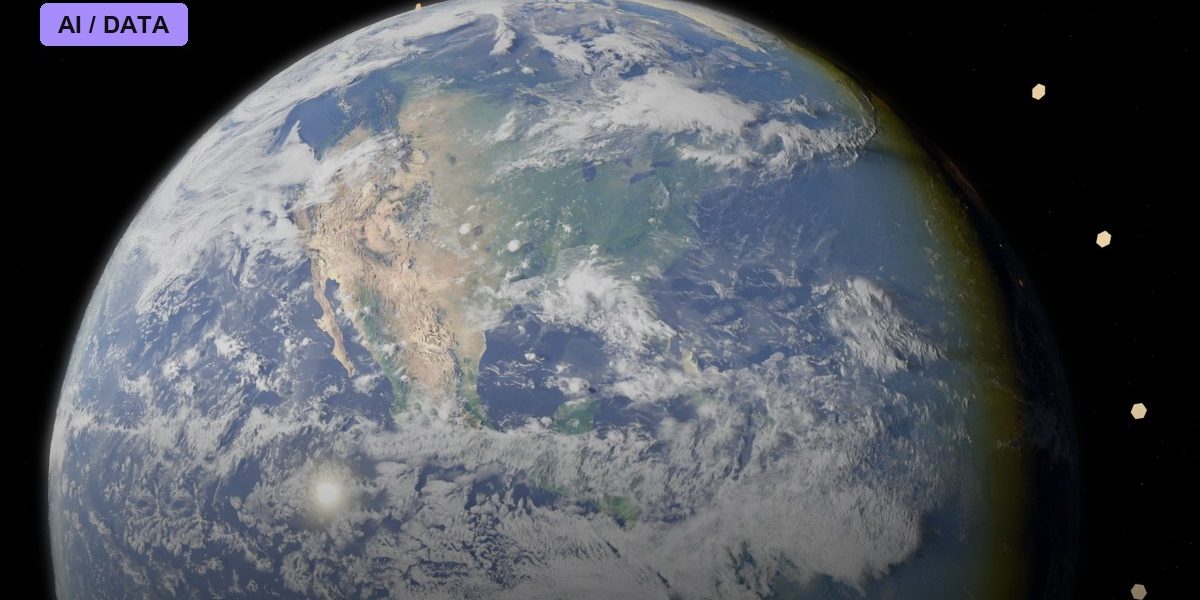
The weather forecast is being rewritten by artificial intelligence — and the old supercomputers are losing. In 2026, AI weather models have crossed a tipping point, matching or beating traditional forecasts on accuracy while running up to 500 times faster. The implications reach far beyond knowing whether to pack an umbrella, touching storm safety, farming and the power grid itself.
The accuracy tipping point
The gap has flipped. AI models trained on decades of historical weather data can detect subtle patterns and predict conditions faster and more precisely than the physics-based systems that long dominated forecasting. One leading model, EPT-2, tops 2026 benchmarks and outperforms the respected ECMWF HRES system across every lead time for wind, temperature and solar radiation. The machines have learned the weather — and they are winning.
Speed changes everything
The leap in speed is transformative. Traditional forecasts require hours of number-crunching on massive supercomputers; AI models can deliver comparable or better predictions up to 500 times faster, on far less hardware. That means more frequent updates, more forecast scenarios, and the ability to run predictions cheaply and often — a practical revolution for anyone who depends on timely weather information.
Powering the energy transition
One of the biggest beneficiaries is renewable energy. Grid operators are deploying AI weather tools to predict when the sun will shine on solar panels and the wind will turn turbines, letting them balance supply and demand in real time. By forecasting renewable output accurately, AI helps integrate clean energy into the grid — smoothing the intermittency that has long challenged wind and solar.
Beyond the forecast
The same techniques extend to related challenges. AI monitors reservoirs, aquifers and consumption patterns to predict water shortages, optimize distribution and spot leaks. It tracks wildlife across millions of camera feeds to flag shifts in at-risk populations. And combined with conventional climate models, AI can predict heatwaves faster than standard approaches — sharpening early warnings for dangerous extremes.
The catch
There are caveats. AI models learn from past data, which can make them less reliable for unprecedented events outside their training — exactly the extreme weather a warming world is producing more of. There is also the paradox that training and running AI consumes significant energy. Experts stress AI should augment, not fully replace, physics-based models, blending the strengths of both for trustworthy forecasts.
The bottom line
AI has turned weather forecasting on its head — delivering faster, often more accurate predictions that are reshaping storm warnings, water management and the renewable-energy grid. It is one of the most consequential real-world applications of AI, quietly improving decisions that affect safety and infrastructure every day, even as forecasters work to ensure the new tools stay reliable when it matters most.
Photo: public domain via wikimedia