
Representation: Learning What to Represent
Before a problem can be solved it must be described, and the description decides the difficulty. The right features make...
Before a problem can be solved it must be described, and the description decides the difficulty. The right features make...
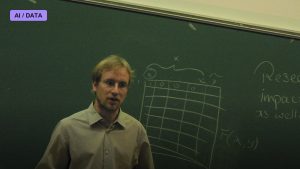
To predict a system's behavior one can watch it for a long time or imagine many copies at once. A...

No finite set of examples logically compels a general conclusion. To infer a rule from cases is to leap beyond...

Noise is usually the enemy of signal, yet in learning and in nature it can help. A dose of randomness...

To train a model is to descend a landscape of error, seeking its lowest point. The shape of that terrain,...
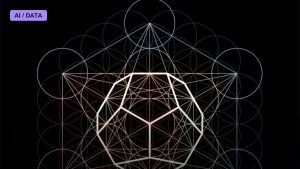
Our intuitions are built for three dimensions and betray us in many. In high-dimensional spaces, volume concentrates strangely, distances flatten,...

An extreme result tends to be followed by a less extreme one, not because of any force but because extremes...

What does it mean to say an event is probable? One view holds that probability is not a property of...

Infinity is not a single vast number but a hierarchy of sizes, some larger than others. The counting numbers and...

Within any sufficiently rich system of mathematics there are true statements it cannot prove. Consistency and completeness cannot both be...